The body does not simply stop at a chosen hour. It prepares. That preparation — orchestrated through temperature shifts, hormonal timing, and accumulated wakefulness pressure — can be assisted or disrupted by what happens in the ninety minutes before sleep. This documentation examines the practical structure of evening wind-down sequences: their component parts, the order of those parts, and why the sequence matters as much as any individual element within it.
The Body's Pre-Sleep Preparation Period
Several hours before habitual sleep onset, the body begins a quiet sequence of adjustments. Core temperature starts its descent. Alertness pressure shifts. The transition is gradual and easily overridden by environmental disruption — bright light, sustained cognitive engagement, or the stimulating quality of certain media. The evening wind-down sequence is the practice of not overriding that preparation. It is, in a structural sense, an act of non-interference.
The circadian system — which governs the timing of sleep pressure — relies on external cues to maintain its daily calibration. Light is the most significant of these cues, but it is not the only one. Temperature, social interaction patterns, and the predictability of habitual sequences also contribute to what circadian researchers describe as the entrainment of the internal clock. A consistent evening routine participates in that entrainment simply by being consistent.
The field notes compiled over this observation period consistently referenced a threshold effect: participants who had established a sequence of three or more predictable evening behaviours — in a regular order — reported noticeably smoother sleep transitions than those who had only isolated habits without sequence context.
Sequence Structure: What the Documentation Shows
Across the observation period, several structural elements appeared reliably in the reported wind-down practices of those with the most consistent rest patterns. These are documented here not as prescriptions but as observed patterns:
- A defined end-point for work-related or high-stimulation activity — not simply an informal drift away from screens, but a decided stop at a consistent time.
- A transition marker: an activity that explicitly signals the shift from the active part of the evening to the wind-down portion. For some participants this was a specific drink; for others, a change of environment or clothing.
- A sustained low-stimulation activity lasting at least twenty minutes — reading print material, slow movement, journalling, or sitting without screens.
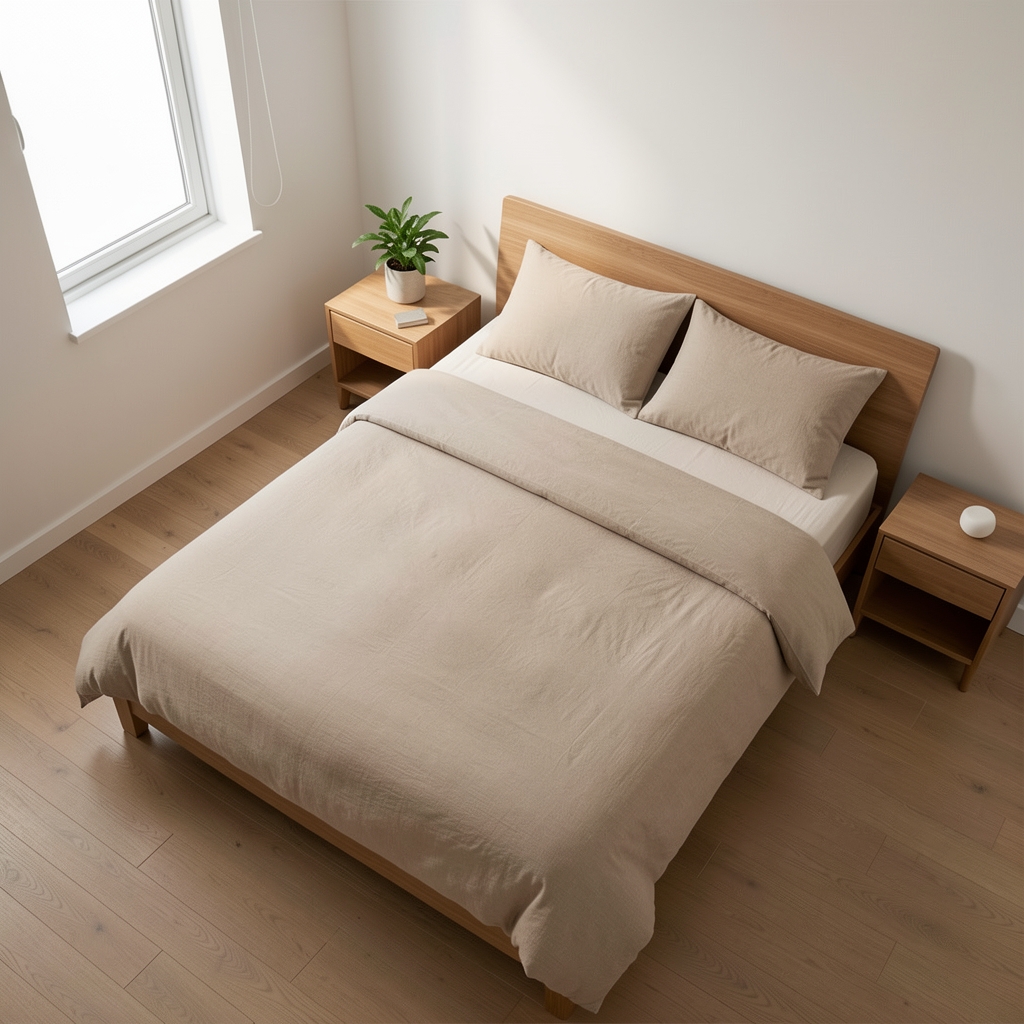
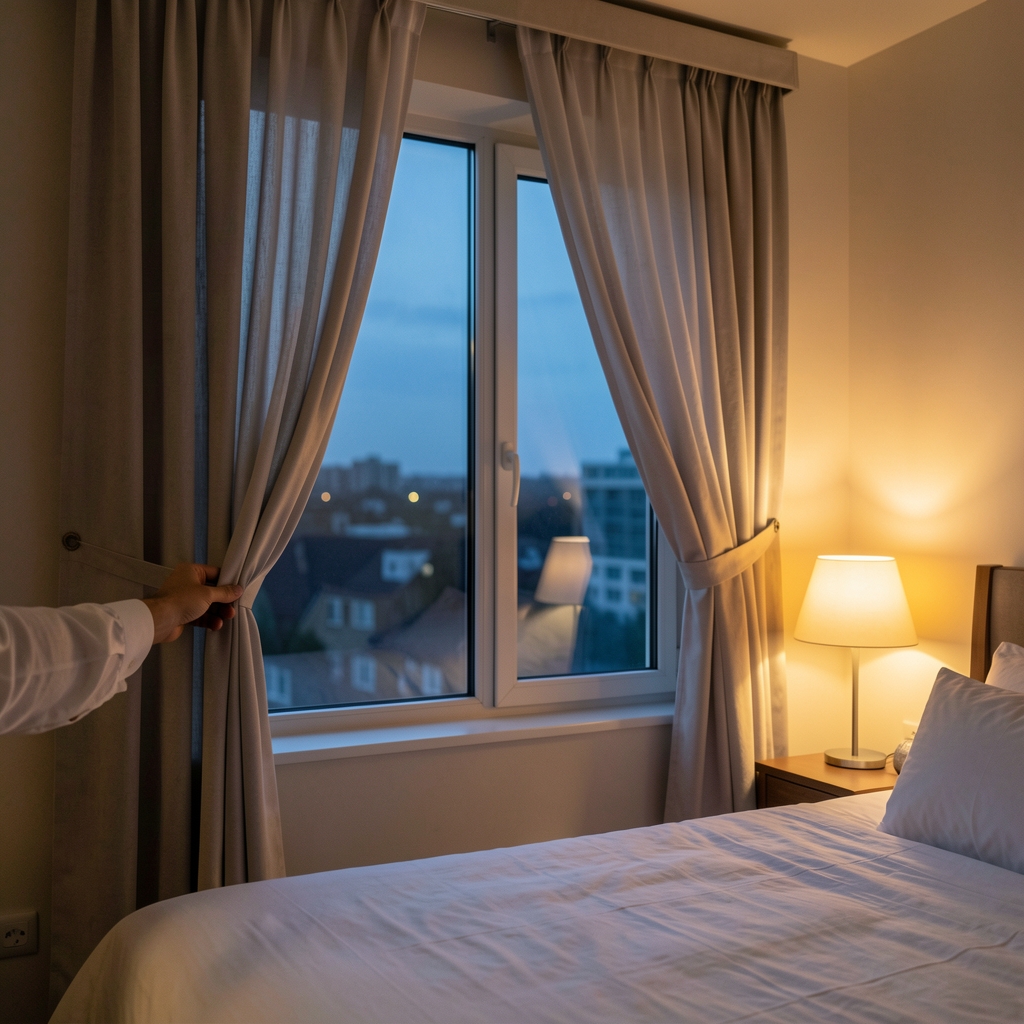
- A final environmental adjustment before lying down: lighting reduced to near-dark, temperature lowered where controllable, phone screens absent from the bedroom space.
The order mattered. Participants who performed these elements in varying sequences across different evenings reported less consistent sleep onset. The sequence appears to function as a signal in itself — not because each step has independent physiological significance, but because the pattern is recognisable to the system it is trying to address.
Light as the Primary Evening Variable
Light management in the ninety minutes before sleep emerged as the single most impactful individual variable in the observation documentation. The specific mechanism is well-established in the published literature: light exposure — particularly in the blue-spectrum range — suppresses melatonin production and delays the internal timing of sleep onset.
What the field notes add to this established finding is an observation about the nature of the delay. Among participants who reduced light exposure gradually over the wind-down period (overhead lights dimmed progressively, screens set to warmer colour temperatures, then removed), the evening felt qualitatively different — described variously as "quieter", "slower", and "less resistant to sleep". Among participants who maintained full overhead lighting until ten minutes before lying down, the experience of lying in the dark was described as effortful and wakeful.
"The dimming process does most of the work. By the time I lie down, the transition has already been happening for an hour."
This subjective report from one participant captures what appears to be the functional distinction between a wind-down sequence and a wind-down point. The difference is between a process and an event: the former distributes the transition across time; the latter attempts to compress it into a moment.
Temperature and the Quiet Hour
A second environmental variable documented across the observation period was bedroom temperature, specifically the experience of entering a sleeping space that was measurably cooler than the rest of the home. This is not a complicated intervention — it often amounts to opening a window earlier in the evening — but its effect on reported sleep onset was consistent.
The physiological background is relevant here: core body temperature drops naturally in the pre-sleep phase, and a cooler external environment supports that drop rather than opposing it. A warm sleeping space effectively works against the body's own pre-sleep preparation, requiring more effort to achieve the temperature equilibrium associated with rest onset.
Field note documentation placed the optimal range — identified through participants' own experimentation — consistently between 17 and 20 degrees Celsius. Below this, participants reported waking from cold. Above it, they reported broken sleep from heat. The window is not narrow, but it is specific. Where central heating controls permitted, participants who managed bedroom temperature deliberately reported more consistent rest.
Cognitive Engagement: The Role of the Active Mind
Perhaps the most persistent observation in the field notes concerned the difficulty of transitioning from sustained analytical or emotionally involving activity directly into restfulness. Several participants were engaged in professional work that extended into evening hours. Those who attempted to stop working at 21:30 and sleep by 22:30 without an intervening period of cognitive decompression consistently reported difficulty falling asleep.
The decompression appears to require a specific type of activity — not passive consumption (which was noted as equally activating for many participants), but directed, low-demand engagement: a physical task, a slow walk, light manual work, or reading something chosen for interest rather than obligation. The activity type that worked varied by individual. What did not vary was the apparent necessity of a buffer period between high-demand engagement and the expectation of sleep.
In the documentation, participants who incorporated a consistent twenty-to-forty-minute low-demand activity between their last high-stimulation engagement and lying down reported the smoothest transitions. This held even when the activity itself was brief — the existence of a buffer appeared more important than its length, up to a minimum threshold.
Building the Sequence: Notes on Practicality
Several participants noted that the sequence felt artificial or self-conscious in the first one to two weeks of establishing it. This observation aligns with what is known about habitual behaviour generally: the early performance of a new sequence requires deliberate attention and feels effortful. By the third week, most participants reported the sequence becoming automatic — something initiated without conscious decision. By weeks five and six, several reported that deviation from the sequence (a late event, an unusual schedule) produced a noticeable sense of unreadiness for sleep, confirming the habitual anchoring of the pattern.
The practical implication for those building an evening routine from the field notes perspective is this: the sequence does not need to be elaborate. Three or four consistent elements, performed in a fixed order, at a consistent time, appear sufficient to establish the associative and physiological effect. Complexity is not a requirement — consistency is.
London, February 2026. Documentation: Tobias Marsden. Revision: 01. Editorial review: Eleanor Whitfield. Sources available on request via editorial contact.