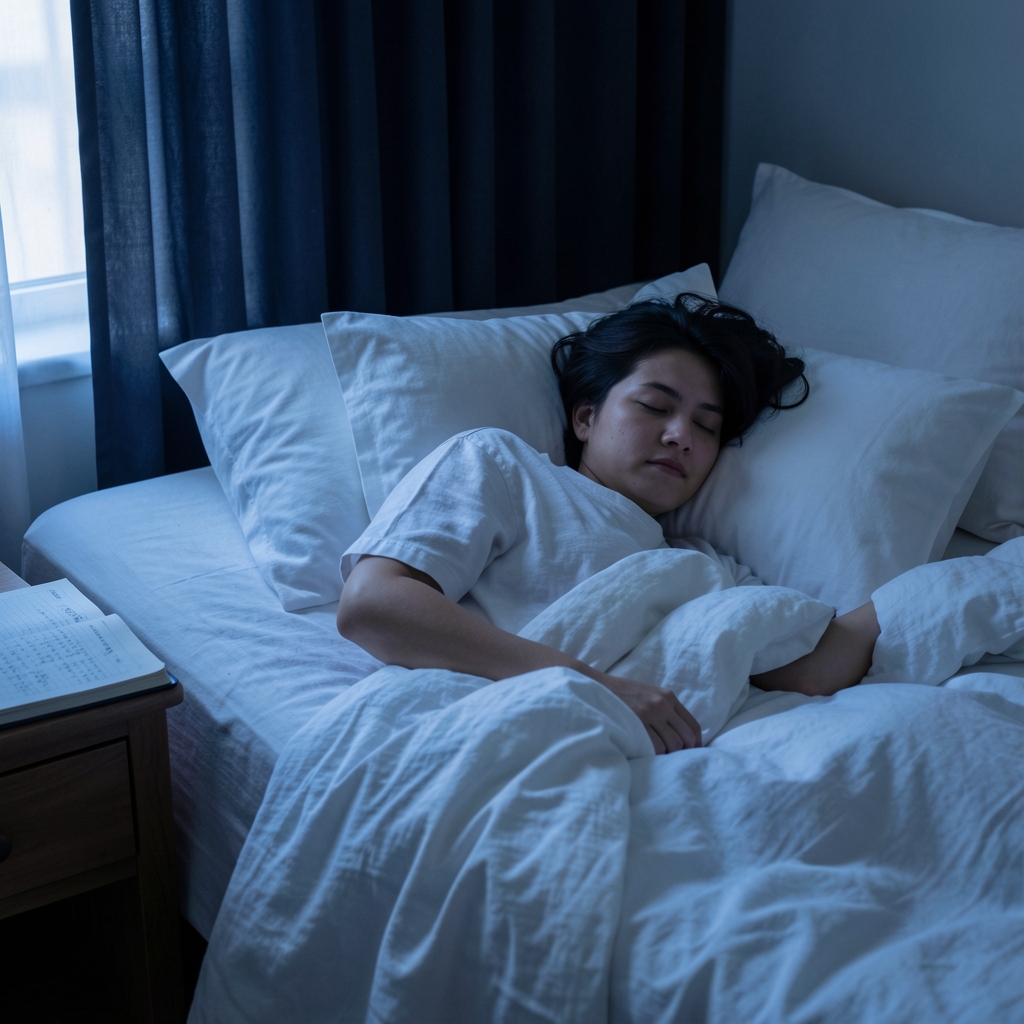
The bedroom occupies a specific role in the daily pattern of rest and wakefulness — one that is shaped less by intention than by accumulated environment. What a space contains, how it is lit, how warm or cool it remains, and what sounds reach it in the night all contribute to whether the body associates entry into that space with the beginning of rest or with something more ambiguous. This documentation surveys the environmental variables observed across a sustained period of bedroom-focused rest research, cataloguing which adjustments produced the clearest changes in reported sleep quality.
Light: Management Across the Full Day
The relationship between light and sleep quality extends well beyond the final hour before bed. Morning light exposure, midday brightness, and the gradual reduction of light intensity through the evening all form part of a single daily signal — a continuous communication to the circadian system about where in the cycle the body currently sits. The bedroom's light environment matters at both ends of the day, not just in the evening.
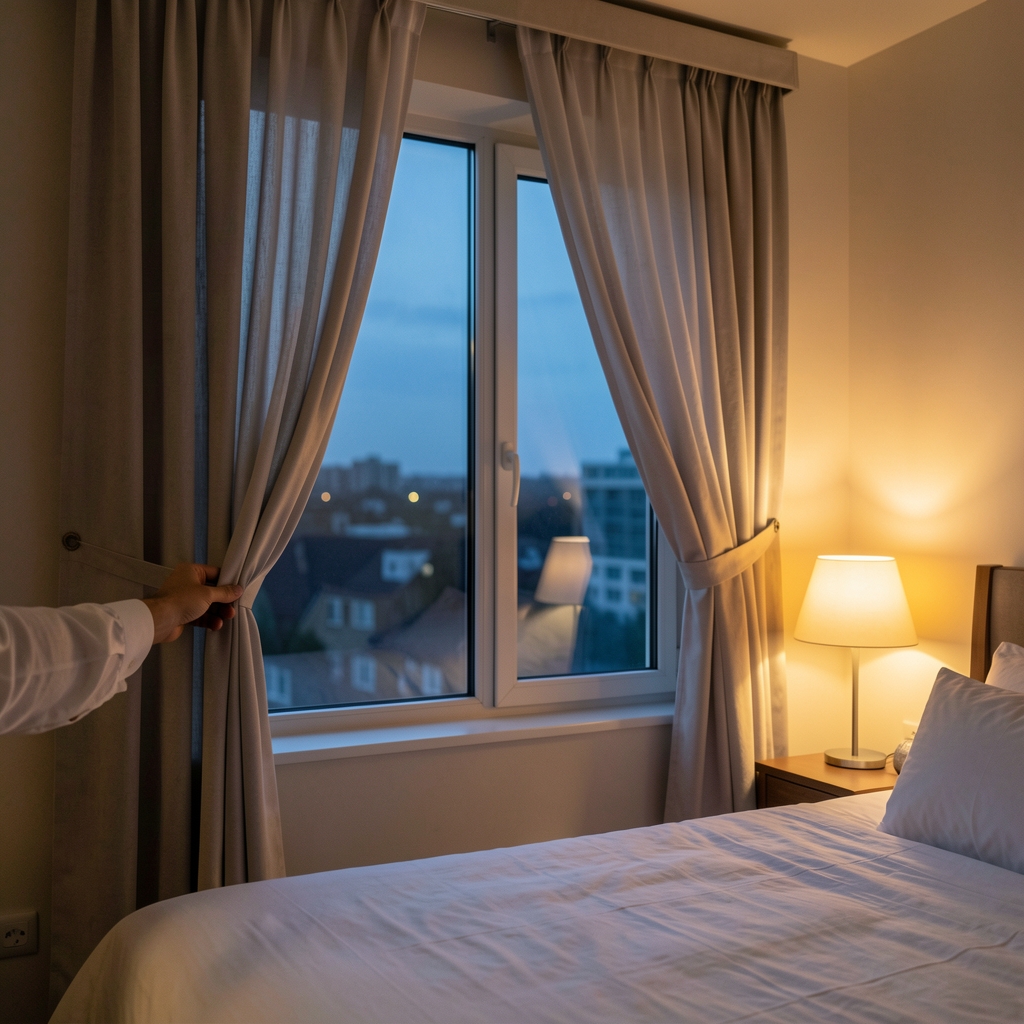
In the field notes documented over this observation period, participants who used blackout curtains or heavy blinds consistently reported two distinct benefits: easier sleep onset in summer (when natural light extends into late evening in London), and more controlled morning wake transitions in winter (when artificial street lighting is the primary overnight exposure). The absence of blackout provision was the most frequently cited unresolved variable among participants who reported fragmented sleep despite other consistent habits.
Evening light management extended to the type of artificial light present in the room. Overhead ceiling lights — particularly those with cooler colour temperatures — were flagged in the documentation as disruptive when used in the hour before sleep onset. Participants who switched to a single bedside lamp with a warm-spectrum bulb during the wind-down period reported the transition to darkness feeling considerably less abrupt.
Temperature: The Overlooked Variable
Temperature appeared more frequently in the field notes than any other single environmental variable, and with greater consistency of effect. The physiological basis is straightforward: the body's core temperature drops in the hours approaching sleep onset, and an environment that supports this drop accelerates the transition. A room that remains warm — through inadequate ventilation, heavy bedding, or poor radiator management — effectively counters the body's own preparation.
Across participants, the most comfortable sleeping temperatures ranged between 17 and 20 degrees Celsius. Within this band, individual preferences varied — some participants found anything above 18 degrees disruptive; others found anything below 19 degrees too cool for comfortable rest. The precise temperature mattered less than the principle: the bedroom should be cooler than the rest of the home during sleep hours, and cooling should begin before lying down, not after.
"Opening the window at 9pm and closing it at 10:30 changed the quality of my sleep more than anything else I had tried. The room was at a different temperature when I arrived in it."
Bedding weight was a secondary variable under this category. Participants who used heavy duvets year-round, without seasonal adjustment, reported frequent waking from warmth during the spring and summer months. Those who had a lightweight alternative available showed greater sleep consistency across the year. The field notes include a notable pattern: participants who made the temperature adjustment first — before addressing any other variable — reported faster improvement in their overall rest experience than those who began with other environmental changes.
Sound: What the Documentation Captured
Sound management in the context of sleep is often framed as a binary — noise versus quiet. The observation data suggests a more nuanced picture. Complete silence was not universally associated with better rest; for several participants, a low-level consistent background sound — the hum of a fan, distant traffic at a stable volume, or recorded ambient sound — was reported as more conducive to uninterrupted sleep than absolute quiet.
The pattern that appeared most clearly was not about decibel level but about predictability. Variable sounds — the intermittent ping of a notification, irregular traffic bursts, a neighbour's conversation — were consistently cited as sleep-disruptive regardless of their actual volume. Steady, unchanging ambient sound was far less likely to cause waking or prevent sleep onset. The key variable was consistency, not absence.
Participants in the London documentation cohort faced a specific version of this challenge: urban ambient noise from streets and transport. Those who used consistent masking sound sources — a fan positioned away from the bed, or a white noise generator at low volume — reported better rest consistency than those who relied on double glazing alone. The practical implication is that masking works better as a strategy than insulation, particularly in older building stock.
Surface and Textile Choices: Documented Observations
The surface and textile composition of the sleeping environment — mattress condition, pillow support, bedding material — was documented as a category separate from temperature, though the two are closely related. Several participants in the observation period reported making no environmental changes other than replacing a pillow that had lost structural integrity, and observing a marked improvement in neck comfort and morning freshness across the following weeks.
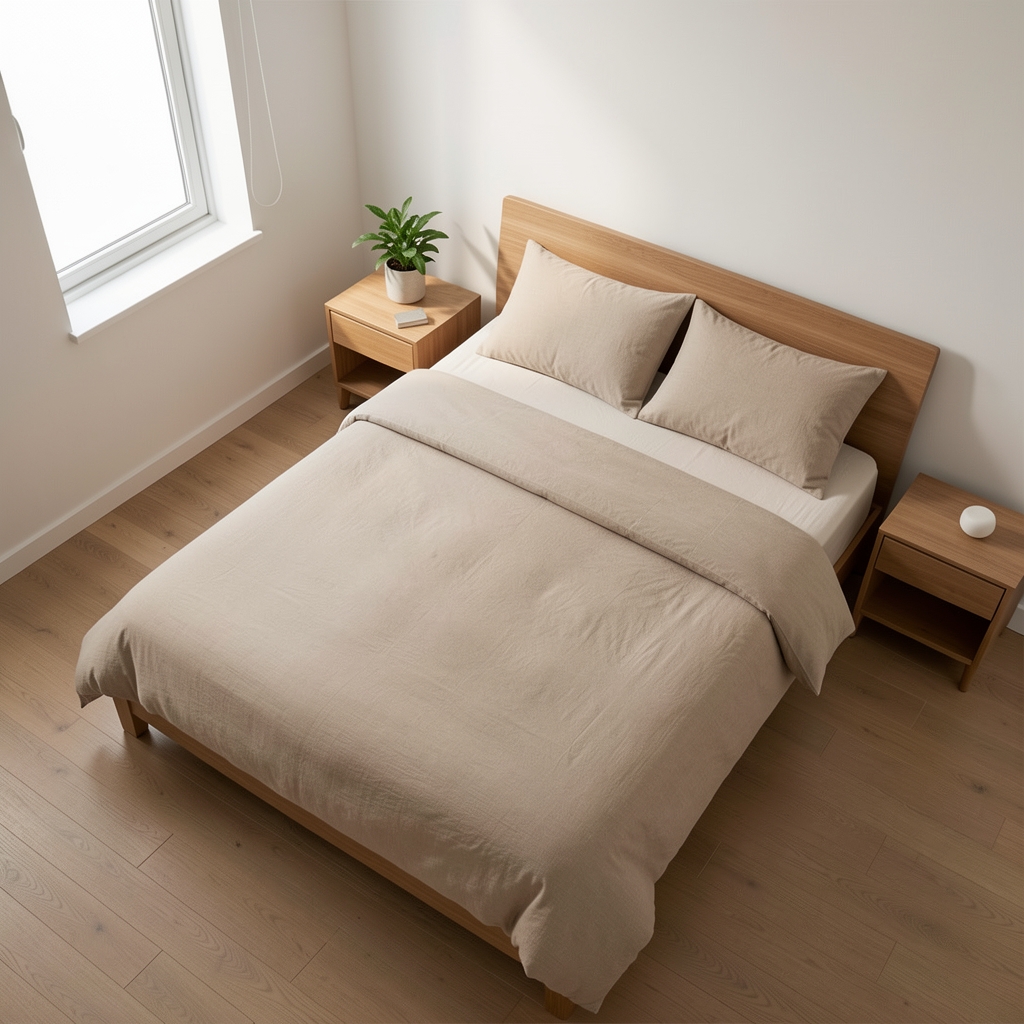
The field notes record a consistent observation about bedding materials: natural fibre bedding — cotton and linen in particular — was associated with fewer reports of night sweating and mid-sleep waking from warmth compared to synthetic materials. This is not a surprising finding in the context of what is known about moisture management in natural versus synthetic textiles, but it appeared frequently enough in the documentation to merit inclusion. Participants who had not considered their bedding material as a variable reported the change as unexpectedly impactful.
Mattress condition, while harder to change, was flagged in the documentation as a foundation variable — one whose deterioration can undermine all other environmental adjustments. Participants with mattresses over ten years old who reported persistent physical discomfort during the night were noted as an unreliable cohort for evaluating other variables, given the persistent floor-level disruption of the surface itself.
The Bedroom as a Single-Purpose Space
One of the more consistently observed patterns across all participants was the relationship between bedroom function and sleep quality. Participants who used their bedroom primarily for sleep — and had removed or minimised work materials, screens, and high-stimulation objects — reported faster sleep onset and less time spent mentally engaged while lying down compared to those whose bedrooms also served as offices, entertainment spaces, or general living areas.
This is not a new observation in the published literature on sleep practice, but the field notes add a specific texture to it: the impact appeared proportional to the degree of function overlap. A participant who occasionally read in bed, in a room otherwise dedicated to sleep, showed minimal disruption. A participant who worked from bed for several hours each day, in a room containing a monitor, work materials, and notification-enabled devices, showed significantly more difficulty disengaging from cognitive activation at bedtime.
The documentation on this point is consistent enough to support a straightforward observation: where it is possible to restrict the bedroom to rest and sleep — or to create a strong environmental association between the space and rest — the quality and ease of sleep onset appears to benefit. This is achievable through environmental cues as much as through physical rearrangement: consistent lighting patterns, consistent scents, and consistent sound environments all contribute to the associative signal the space sends.
Practical Notes from the Bedroom Environment Survey
The following observations summarise the most actionable findings from the documented bedroom environment survey:
- Blackout provision (curtains or blinds) produced the single most consistent improvement in sleep onset time and morning wake quality among participants in this London cohort. The investment-to-impact ratio was notably high.
- Bedroom temperature should be managed proactively, beginning at least ninety minutes before sleep. Cooling a room after lying down is considerably less effective than arriving in a room that is already at resting temperature.
- Consistent, low-level ambient sound is preferable to unpredictable silence in urban environments. A fan or dedicated masking source is more reliable than attempting to eliminate external sound entirely.
- Natural fibre bedding — particularly linen and cotton — appears to support more temperature-stable sleep than synthetic alternatives, particularly across spring and summer months.
- Phone and screen presence in the bedroom was documented as a specific disruptor — not only through light emission, but through the cognitive alertness that proximity to connected devices appeared to maintain. Participants who removed phones from the bedroom space reported the most consistent improvement in the time spent engaged in pre-sleep mental activity.
Conclusion: Environment as an Active Participant
The bedroom environment is not a passive backdrop to sleep practice. It participates actively in whether sleep comes easily, how deeply it proceeds, and how refreshed the morning transition feels. The documented observations across this survey support a view of environmental adjustment as a legitimate and often underestimated component of rest quality — one that can be approached systematically, one variable at a time, without requiring dramatic change.
The next phase of the Taleva Field Notes bedroom series will focus on the specific challenge of shared sleeping environments — the particular negotiation of temperature, light, and sound preferences when two people with different rest patterns occupy the same space.
London, March 2026. Documentation: Eleanor Whitfield. Revision: 01. Editorial review: Tobias Marsden. Sources available on request via editorial contact.